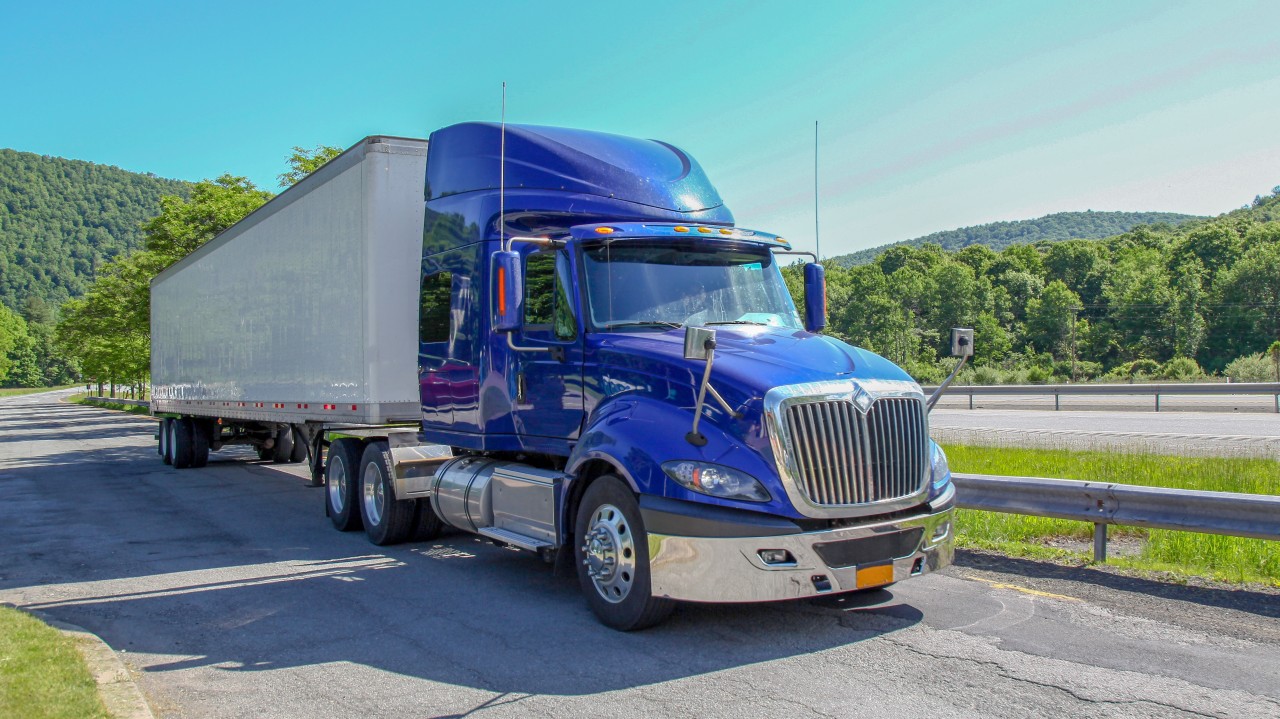
FMCSA is studying whether selected truck drivers can safely receive greater flexibility within their normal 14-hour driving windows.
The proposed Split Duty Period Pilot Program could help researchers understand how detention, rest breaks, and other non-driving periods affect trucking operations.
For motor carriers and private fleets, the proposal raises important questions about scheduling, driver availability, and operating costs.
However, the proposed pilot does not change a company’s annual Unified Carrier Registration requirements.
With the 2027 UCR registration season underway, carriers should keep both operational planning and annual registration on schedule.
What Is the FMCSA 14-Hour Pilot?
The proposed Split Duty Period Pilot Program would allow selected property-carrying drivers to exclude one qualifying non-driving period lasting from 30 minutes to three hours from the 14-hour driving window.
The program is intended to examine whether additional flexibility can maintain or improve safety.
It is not a permanent change to the industry-wide hours-of-service rules.
Drivers outside authorized participation must continue following the regulations applicable to their operations.
How Does the Current 14-Hour Rule Work?
Property-carrying drivers subject to the standard HOS rules generally may drive up to 11 hours after 10 consecutive hours off duty.
That driving ordinarily must be completed within 14 consecutive hours after coming on duty.
Time spent waiting at a loading dock can consume part of that window.
The proposed pilot would study whether certain non-driving periods should receive different treatment.
Could the Pilot Create a 17-Hour Window?
For an authorized participant, a qualifying three-hour pause could potentially extend the elapsed driving window from 14 hours to 17 hours.
The normal 11-hour driving limit would remain unchanged.
The longer elapsed period raises questions about fatigue, scheduling, and rest.
FMCSA is gathering evidence before deciding whether broader changes should be considered.
What Happened During the 2026 Pre-Test?
FMCSA conducted a pre-test from May 18 through July 17, 2026.
Nine drivers from three motor carriers participated.
The agency announced on August 27 that it was reviewing the findings and preparing for the larger study.
The pre-test evaluated research procedures rather than establishing a new rule for all carriers.
What Is Planned for 2027?
FMCSA expects approximately 256 drivers to participate in the larger Split Duty Period study.
The planned participation period is four months.
Drivers may receive up to $1,600 for completing the required research activities.
The program remains subject to applicable study procedures and authorization.
Why Does Detention Matter for Fleets?
Waiting at shippers and receivers can reduce the amount of available driving time.
A carrier may have equipment and a qualified driver available but still be unable to complete another trip within the normal window.
This can affect scheduling and customer service.
The proposed pilot seeks to understand whether limited flexibility can help without creating new safety risks.
Could Greater Flexibility Increase Detention?
Possibly.
If certain waiting time no longer reduces a participating driver’s available window, facilities may have less incentive to minimize delays.
FMCSA has stated that it plans to monitor shippers for increased detention and driver exploitation during the pilot.
Carriers should continue documenting delays and maintaining realistic schedules.
What Is Unified Carrier Registration?
UCR is an annual registration and fee program for qualifying interstate transportation businesses.
Covered entities generally include motor carriers, motor private carriers of property, brokers, freight forwarders, and leasing companies.
UCR is a business registration obligation.
It does not determine how many hours an individual driver may operate.
Does the 14-Hour Pilot Change UCR Requirements?
No.
A proposed or authorized HOS pilot exemption does not replace UCR registration.
The company’s annual UCR obligation depends on its entity classification and transportation activities.
The applicable UCR fee is not based on driver hours or detention time.
When Is 2027 UCR Due?
The 2027 UCR registration season opened October 1, 2026.
Covered businesses must register and pay before January 1, 2027.
A completed 2026 registration does not satisfy the 2027 requirement.
Businesses should verify payment for the correct registration year.
What Are the Official 2027 UCR Fees?
The approved fees for the 2027 registration year are:
| Qualifying vehicles | Official 2027 fee |
| 0–2 | $55 |
| 3–5 | $167 |
| 6–20 | $333 |
| 21–100 | $1,163 |
| 101–1,000 | $5,548 |
| 1,001 or more | $54,165 |
Covered brokers and leasing companies pay $55.
These are official government fees. Optional private registration assistance may have an additional service charge.
Does a Three-Hour Pause Change the UCR Vehicle Count?
No.
The number of hours a driver works does not determine the UCR fee bracket.
For qualifying carriers, the bracket generally depends on the applicable commercial motor vehicle count.
A pilot participant and a nonparticipant can owe the same UCR fee when their relevant registration circumstances are otherwise identical.
What If a Carrier Adds Trucks?
Adding qualifying commercial motor vehicles may change the applicable UCR bracket.
The business should review its fleet count and the UCR Plan’s counting rules.
Expansion may also require updates to relevant company registration information.
The proposed HOS pilot does not eliminate those responsibilities.
What If a Carrier Adds Drivers but No Trucks?
Hiring additional drivers does not automatically increase the UCR fee.
The vehicle-counting rules remain relevant.
The company must still maintain applicable driver qualification and hours-of-service compliance.
A larger driver pool does not automatically authorize more driving hours per driver.
How Does This Affect Owner-Operators?
An owner-operator may have limited flexibility when detention consumes the normal driving window.
The proposed pilot could eventually provide useful research on that problem.
However, owner-operators cannot begin using the proposed three-hour pause without applicable authorization.
They must also maintain required registrations.
For 2027, a covered carrier in the zero-to-two-vehicle UCR bracket owes $55.
How Does This Affect Private Fleets?
Qualifying interstate motor private carriers of property generally must register for UCR.
They may also operate drivers subject to the federal hours-of-service rules.
The proposed pilot could be relevant to their scheduling practices.
Their annual UCR obligation remains separate from driver HOS requirements.
Do Freight Brokers Need UCR?
Covered freight brokers generally must register annually even when they own no trucks.
The official 2027 fee for covered brokers is $55.
Brokers should also consider how detention and delivery appointments affect the carriers they hire.
A broker’s UCR payment does not grant any HOS exemption to a motor carrier or driver.
Can MCS-150 Information Affect UCR Renewal?
Yes.
The MCS-150 contains company information, including reported power units.
The UCR Plan’s October 2026 guidance explains that certain enrolled automatic renewals use the power-unit count from the most current MCS-150.
Carriers should verify the applicable vehicle count and registration information.
An MCS-150 update does not itself complete annual UCR payment.
Does Motus Replace UCR?
No.
FMCSA’s Motus system supports applicable USDOT registration and company-account transactions.
UCR is completed through a separate annual registration system.
Neither Motus nor UCR authorizes the proposed HOS pilot pause.
What Happens If UCR Is Late?
The UCR Plan states that registration fees remain due after the deadline and that nonregistrants may face state enforcement.
Consequences depend on the jurisdiction.
Late UCR registration is separate from an HOS violation.
Both matters must be addressed through the appropriate process.
How Do You Register for 2027 UCR?
Visit Home – UCR .
Confirm that the business is covered.
Review its entity category and applicable vehicle count.
Select the 2027 registration year.
Complete payment and retain confirmation.
Private assistance is optional.
What Should Carriers Do Before 2027?
Continue following current HOS rules.
Review detention and dispatch procedures.
Monitor official FMCSA pilot announcements.
Verify USDOT and company information.
Review the applicable UCR vehicle count.
Complete 2027 UCR registration before the deadline.
Frequently Asked Questions
Does the proposed pilot change UCR fees?
No. HOS pilot participation is not a UCR fee factor.
Can a carrier use the three-hour pause after paying UCR?
No. UCR payment does not authorize an HOS exemption.
When is 2027 UCR due?
Covered businesses must register and pay before January 1, 2027.
How much is 2027 UCR for one truck?
$55 for the zero-to-two-vehicle bracket, assuming it applies.
Do private fleets need UCR?
Qualifying interstate private motor carriers of property generally do.
Do freight brokers need UCR without trucks?
Covered brokers generally do.
Can a business register directly for UCR?
Yes. The official UCR system supports direct registration.
Keep Operations Flexible and Annual Registration Current
The FMCSA pilot may eventually inform changes to hours-of-service regulations, but the research does not suspend existing HOS rules or annual UCR requirements.
Home – Renew UCR – Online Compliance Services provides private assistance with UCR registration and renewal for covered motor carriers, owner-operators, brokers, freight forwarders, and private fleets.
Visit Home – Renew UCR – Online Compliance Services or call (800) 655-6697 for assistance with your 2027 UCR registration.
Home – Renew UCR – Online Compliance Services is a private registration assistance service and is not affiliated with the UCR Plan, FMCSA, or any government agency. It does not issue HOS exemptions or authorize pilot participation. Covered entities may register directly through the official UCR system without purchasing third-party assistance.